ראשי › בלוג › The Complete Guide to Water Hardness — What It Is, Why It Happens, and What to Do
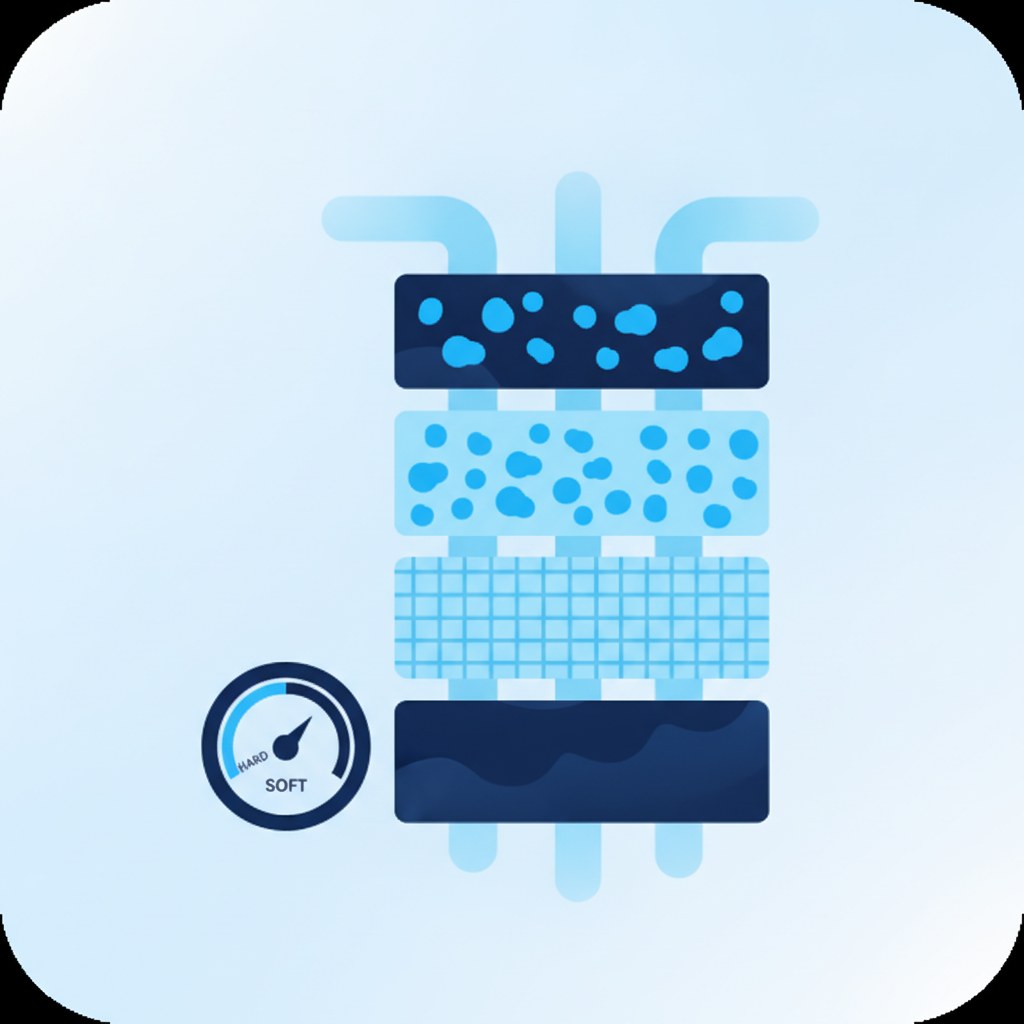
The Complete Guide to Water Hardness — What It Is, Why It Happens, and What to Do
11/06/2026 · מי-עד מערכות סינון מים
Rainwater falls. As it seeps into the ground, it passes through layers of limestone and calcium, dissolving minerals—primarily calcium and magnesium. These minerals remain in the water when it reaches the tap.
Common Classification of Hardness (mg/L as CaCO₃)
- Up to 60 — Soft
- 60–120 — Moderate
- 120–180 — Hard
- Above 180 — Very Hard
This classification is widely accepted in professional literature and noted in WHO documentation, although the organization has not set a mandatory standard.
What Scale Does
When hard water is heated, calcium crystallizes and adheres to pipes, heating elements, and appliances. This causes a boiler's heating element to scale up, work harder, and burn out sooner. A study by the U.S. Department of Energy (DOE OSTI #6457988) measured about a 5% decrease in gas boiler efficiency after significant scale buildup.
Treatment Options
Ion Exchange Softener: Removes minerals, adds sodium. Common in the U.S.
Siliphos/Polyphosphate: Binds minerals, does not remove. Common in Europe and Israel.
Reverse Osmosis: Filters almost everything—usually for a single point of use, not for the entire building.
Magnetic Devices: Lacks solid scientific backing in professional literature.
Apartment Solution vs. Building Solution
An apartment filter typically costs 800–1,500 ₪ annually, plus maintenance. A central system, however, shares the cost among all apartments, amounting to less than 50 ₪ per apartment per month (depending on building size).
Sources: WHO Background Document on Hardness | DOE OSTI Study #6457988
רוצים לדעת כמה זה עולה לבניין שלכם?
השאירו פרטים — נחזור אליכם תוך 24 שעות, ללא עלות.